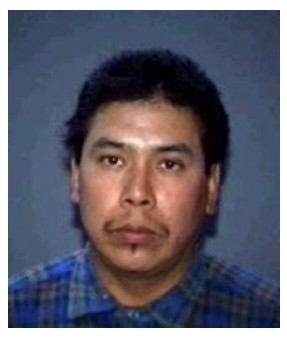
On April 21, 2026, the decision to release him early was reversed during an En Banc Parole Board Review Hearing
(Woodland, CA) – April 22, 2026 – On Tuesday, April 21, 2026, during an En Banc Parole Board review hearing, the Board voted to reverse the decision made by a two-commissioner panel in January to recommend the early release of Israel Ceja, under current elder parole laws. A new hearing will be scheduled on the next available calendar.
Last week the District Attorney held a press conference urging the public to take action to stop the release. The victim in the case spoke at the press conference about her victimization, stating that it affected every area of her life and that she could not form relationships with people because they would always let her down and that she could not create bonds with people as a result of her trauma. She felt like her pain and trouble did not matter and that she did not matter. She said, “You have no idea, it is not only little girls that he likes. He will go after little boys, too. I am afraid that this time he won’t get caught because he won’t leave anybody alive.”
The victim was not present for either hearing. Asst. Chief Deputy District Attorney David Wilson attended yesterday’s En Banc review hearing, where he reminded the Board that Mr. Ceja was diagnosed with pedophilia in a psychological report authored in December of 2021. The report was created in preparation for a 2022 hearing where Mr. Ceja stipulated to a three-year denial. Pedophilia is treated with medication, individual and group therapy. There is no cure. Again in 2025, another mental health doctor diagnosed Mr. Ceja with pedophilia. Mr. Ceja admitted to this doctor of still having sexually arousing feelings about prepubescent girls. He did not disclose the last time he had these feelings despite questions from the commissioners and the DDA who attended the hearing.
At the January 29th hearing, the commissioner started by saying Mr. Ceja does not have a diagnosis. Two doctors have found otherwise. He has not engaged in any real sex offender treatment since the diagnosis in 2021. There was inadequate consideration by the original commissioners of this diagnosis and the threat it poses to the public due to the lack of treatment. Especially with his admissions of still having sexual attraction towards children. Releasing him at this point would expose the public to a ticking time bomb of an untreated pedophile. Mr. Wilson requested the full board reverse the grant of elder parole.
In 1993, Ceja married the victim’s mother and began participating in bathing the then 11-year-old. He began molesting her and she was in fear that she would be removed from her mother’s care if she reported sexual abuse, again. The defendant knew a former boyfriend of her mother had sexually abused the victim, leading her to be removed from the home. The defendant’s abuse progressed and continued until the victim fainted in public in 1999 and was taken to the hospital where it was discovered she was pregnant. The DNA of the fetus confirmed the defendant was the genetic father. Investigation determined that he had tried to make her jump from the house and a truck ramp to try to induce miscarriage. Additionally in July of 1999 after coming home intoxicated from a party he had pointed a gun at the victim, accused her of looking at other men, then pulled the trigger. Fortunately, it did not fire, and the victim was able to escape.
On September 29, 2000, a Yolo County jury convicted Ceja of multiple counts of forcible rape, assault with a firearm, child endangerment and lewd acts. On November 1, 2000, Yolo County Superior Court Judge Timothy Fall sentenced Ceja to 139 years in state prison.
The Elderly Parole law in California allows inmates who are 50 years or older and have served at least 20 years in prison, or those who are 60 and have served 25 years, to apply for early release and parole. While certain offenders, such as those sentenced to death or life without parole are excluded from this program, child rapists and other sex offenders are eligible for consideration. Ceja was 63 years old and had served 26 ½ years in custody at the time of this hearing.
California Board of Parole Commissioner Neil Schneider and Deputy Commissioner Letizia Pinitore opined that Mr. Ceja no longer posed an unreasonable risk to society if released. Commissioner Schneider explained that Ceja’s age, his extensive programing, numerous laudatory notes, lack of misconduct while incarcerated, his lower Static 99 and Criminal Risk Assessment and his “genuine” plans for parole were very “authentic and real” and therefore justified the joint decision to recommend him for parole. Commissioner Schneider referred to Ceja as an “excellent citizen.”
Ceja admitted in the same hearing that he suffered from the “disorder” of being attracted to young girls. He also indicated that his primary way of controlling his pedophilic urges is “praying.” At last Friday’s press conference, the victim stated that “You don’t understand what he meant when he said he would “pray.” He told you guys right there what he was going to do…. That he was going to go out and prey on little kids, not that he was going to be praying to God.”
District Attorney Reisig commended the victim’s bravery and said: “This victim’s willingness to come forward and speak openly about her victimization is both courageous and impactful. Her voice matters. I believe the parole board made the correct decision in reversing the release, recognizing the lasting harm caused and the need to prioritize community safety. But although the En Banc panel made the correct decision to reverse the grant of parole, California’s Elder Parole Law needs to be fixed.”
 ###
###